
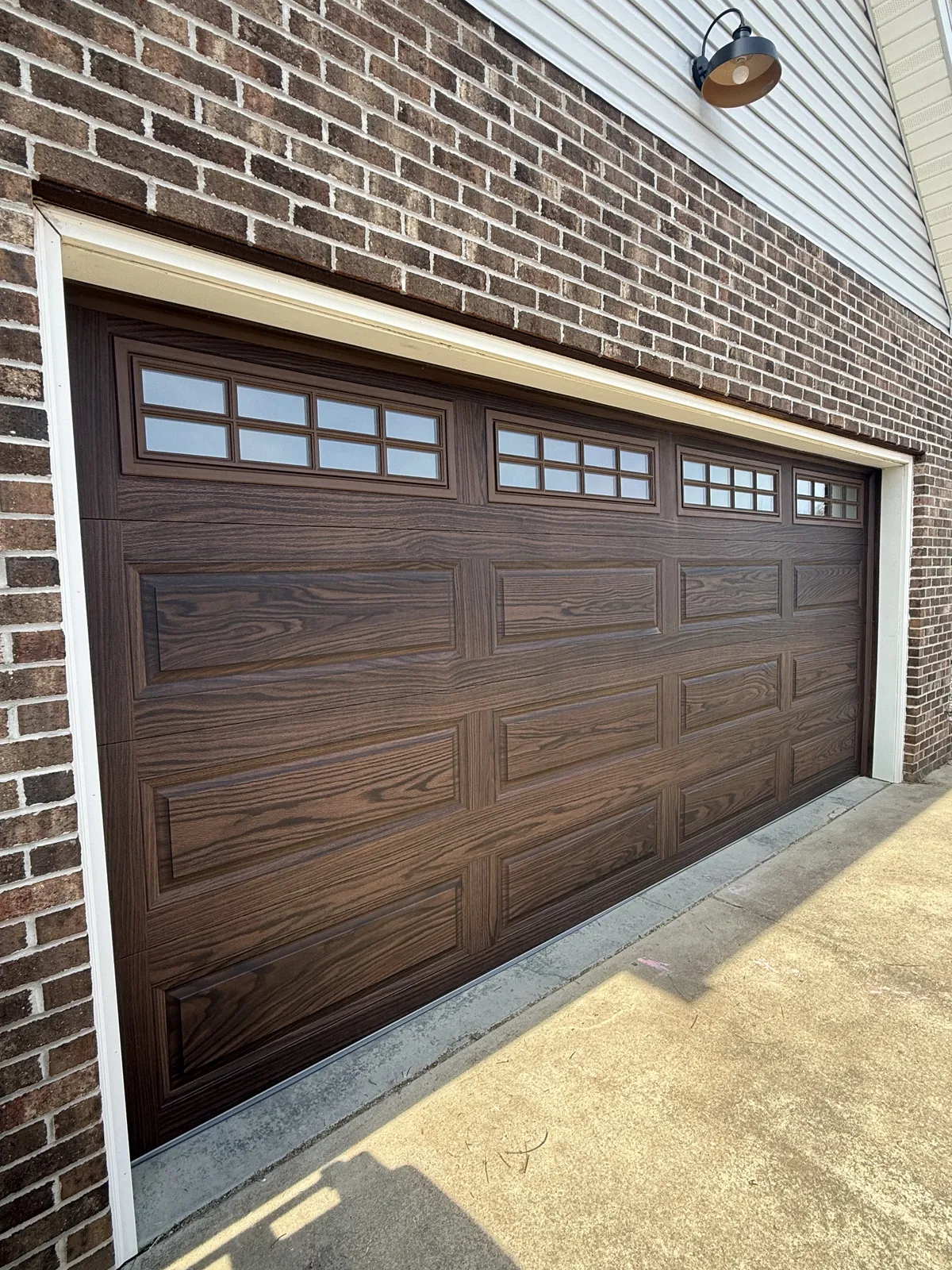
You asked three companies to price the same job and got three numbers that have almost nothing in common. That is not because one of them is trying to rob you. It is usually because they are not quoting the same job.
Garage door quotes hide their differences in vague language. "New garage door, installed." "Replace springs." Those phrases can describe genuinely different work at genuinely different quality levels, and the cheapest version of each is a real product that a real company will happily sell you.
So the skill worth having is not haggling. It is reading. Here is what a quote should tell you, and what it means when it does not.
The quote should name the door, not the category
"16x7 steel door" is a category. There are a lot of doors in it, and they are not interchangeable.
A quote you can actually evaluate names the manufacturer and the model or series. From there you can look up what you are being sold. Without it you are trusting that the word "steel" means the same thing on all three quotes, and it does not, because steel doors differ in the thickness of the skin, in whether there is insulation between the layers, and in how many layers there are at all.
That last point matters more than homeowners expect in this climate. A single-layer door is one sheet of steel. A two-layer door adds insulation behind it. A three-layer door sandwiches insulation between two steel skins, which changes both how the door insulates and how solid it feels and sounds when it moves. If your garage is attached to the house, shares a wall with a finished room, or has been turned into a space you actually use, the layer construction is the difference you will notice every day.
Ask which one you are being quoted. If the answer is "steel," you have not been answered.
It should name the spring, and the spring is where the money hides
This is the line item that separates quotes more than any other, and it is the one most likely to be written as three words.
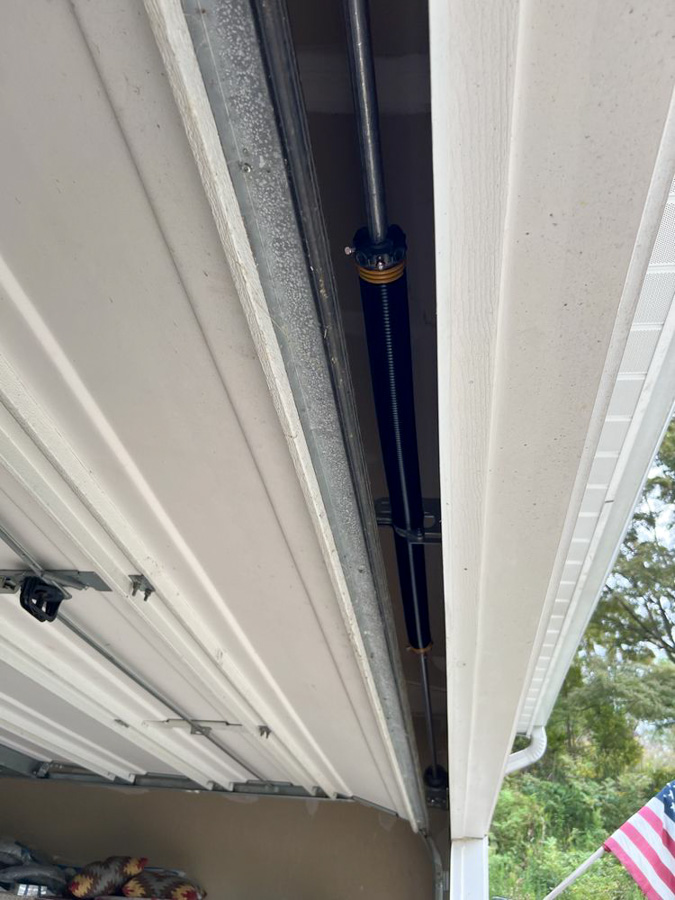
Springs are rated in cycles. One cycle is one full open and close. A spring built for a longer cycle life costs more, lasts longer, and is physically a different spring. Two installers can both write "replace torsion springs" and fit parts with very different service lives.
So ask directly: what is the cycle rating of the spring you are quoting? A contractor who works to a standard will tell you without hesitating, because it is a number they chose on purpose. A contractor who does not know, or who tells you springs are all the same, has answered a different and more useful question.
The same applies to whether the quote includes the hardware around the spring. Cables, bearings, and the bottom brackets live in the same system and wear on a related schedule. Replacing a spring while leaving frayed cables in place is not a completed repair, it is a scheduled return visit.
It should say what happens to the old door
Removal, haul-away, and disposal are real work and real cost. On a quote they are frequently invisible, and that silence is where a cheap number sometimes comes from.
A garage door section is heavy, awkward, and not something the township picks up with the recycling. If the quote does not say the old door and hardware are removed and taken away, ask. The answer occasionally is that they are not, and you find out on installation day.
Our installs include the removal and clean-up. We say so in writing because the alternative is a conversation nobody enjoys having in a driveway.
The warranty should have numbers and a subject
"Fully guaranteed" is not a warranty. A warranty tells you three things: what is covered, for how long, and by whom.
Labor and parts are covered separately, and they usually run for different lengths of time. Manufacturer coverage on a part is not the same as the installer's coverage on the work, and a contractor can offer you a long manufacturer warranty while standing behind their own labor for almost no time at all.
For reference, here is how ours is structured. Labor on most repairs and installs is guaranteed for at least a year. Step up to a premium install and that extends to as much as ten years on parts and labor. Door finishes carry a lifetime warranty, and the premium parts we fit bring their own manufacturer coverage on top of ours.
You do not need to match those terms. You need the quote in front of you to state its own terms just as plainly, because the practical version of a warranty is simpler than the paperwork: when something is not right, who do you call, and what does it cost you?
Look at how the payment is structured
Payment structure tells you about a company's confidence in its own work.
A deposit is normal and reasonable. Doors get ordered to your opening, in your color, with your hardware, and that order is not returnable. What matters is what the deposit is for and what it leaves outstanding.
Our five-step process asks for a 50% deposit to reserve your installation date and schedule the door. The remaining balance is due after installation is complete and you are satisfied with it. That structure is deliberate. There is a meaningful difference between a company that wants a deposit to buy your door and a company that wants the full amount before it starts.
Be careful with any quote that requires payment in full up front, and be careful with one that wants cash specifically. Financing is worth asking about too. We offer it on jobs from $500 up to $25,000, which mostly matters because it means the size of the job and the quality of the parts do not have to be the same decision.
How the price was calculated should not be a mystery
Most homeowners never think to ask this, and it is one of the more revealing questions available.
We calculate a new door using a straightforward formula: width plus height, multiplied by the door style you choose. Then your options get added on, whether that is windows, a color, or specific hardware. You can follow the arithmetic, which means you can see what changes when you change your mind about something.
Not every company prices that way, and that is fine. What is not fine is a number that arrives with no structure behind it, because a price you cannot decompose is a price you cannot compare against anyone else's.
The credentials worth actually checking
Two are worth your time.
The license number. Pennsylvania contractors carry one, and a company that is confident in its standing puts it on the paperwork. Ours is PA195086. A number on a quote can be checked. A claim of being licensed cannot.
Trade certification. This one is specific to garage doors. The Institute of Door Dealer Education and Accreditation (IDEA) runs a certification program for installers and technicians, and it is not automatic. Bear Door is owner-operated by Michael, an IDEA Certified professional with an Electromechanical degree and over 14 years in the trade. That is the person who shows up, not a name on a truck.
Reviews are the third signal, with a caveat. Volume and recency matter more than the average, because a 5.0 from six reviews and a 5.0 from hundreds are describing different levels of evidence. Ours currently sits at a 5.0 average across more than 220 Google reviews.
Why a paid diagnosis is often the honest one
There is a reason we charge a standard $79 Diagnostic Assessment on service calls and inspections, and it is not the $79. It is waived the moment you approve the work.
A diagnosis that costs nothing has to be paid for somewhere, and it usually gets paid for in the recommendation. When the only way a visit becomes profitable is by selling you something, the incentive sits in the wrong place. Charging for the inspection, then waiving it when you proceed, means we can tell you your door is fine and still have had a reasonable day.
Ask whoever you are considering how their diagnosis is paid for. You will learn something either way.
The red flags, in one place
- The door is described by size and material with no manufacturer or model
- Springs are quoted with no cycle rating, and nobody can tell you what it is
- The warranty is described with adjectives instead of durations
- Removal and haul-away are not mentioned at all
- The price arrives as a single number with no structure you can follow
- Payment in full is required before the work starts
- The quote is verbal, or a text message, and nobody will put it in writing
- The price drops significantly the moment you hesitate, which tells you what the first number was
Frequently asked questions
Why are my three garage door quotes so different?
Usually because they are not the same job. Differences in door construction, spring cycle rating, whether old-door removal is included, and how long the labor is guaranteed can separate two honest quotes considerably.
What should be listed on a garage door installation quote?
The manufacturer and model of the door, its construction, the spring specification, the opener if one is included, whether removal and haul-away are covered, the labor and parts warranty durations, and the payment schedule.
Is a deposit normal for a garage door?
Yes. Doors are ordered to your specific opening and finish. A deposit that reserves the order and the installation date is standard. Full payment before work begins is worth questioning.
What is a spring cycle rating?
It is the number of full open-and-close cycles a spring is built to deliver. It is the main reason two spring quotes can differ, and it is a fair question to ask before you choose.
Should I be suspicious of the cheapest quote?
Not automatically, but find out what makes it cheapest. If the answer is thinner door construction, a lower cycle spring, no haul-away, or a shorter labor guarantee, then it is not cheaper. It is less.
Does a lifetime warranty mean the whole door is covered forever?
No, and this is a common misread. Lifetime coverage usually applies to a specific element, such as the door finish. Labor and individual parts carry their own separate terms.
Can I get a price over the phone?
For a new door, not a reliable one. The opening gets measured and the existing setup gets assessed on site, because headroom, track radius, and what is already there all affect what can be installed.
Ask us for the quote you can actually read
Bear Door Services is owner-operated by Michael, IDEA Certified, working under Pennsylvania license PA195086, with more than 220 Google reviews at a 5.0 average. Pricing is up-front with no hidden fees, no shop-supplies charges, and no junk add-ons, and you get the number before any work begins.
We serve Uniontown and the surrounding area, including Brownsville, Connellsville, East Uniontown, Fairchance, Hopwood, Masontown, Oliver, Smithfield, South Union Township, Washington, and Morgantown and Cheat Lake in West Virginia.
Call (724) 429-1395 or request a quote. Bring the other two with you, and we will walk through what the differences actually mean.